
When a simple initiative makes a big environment impact
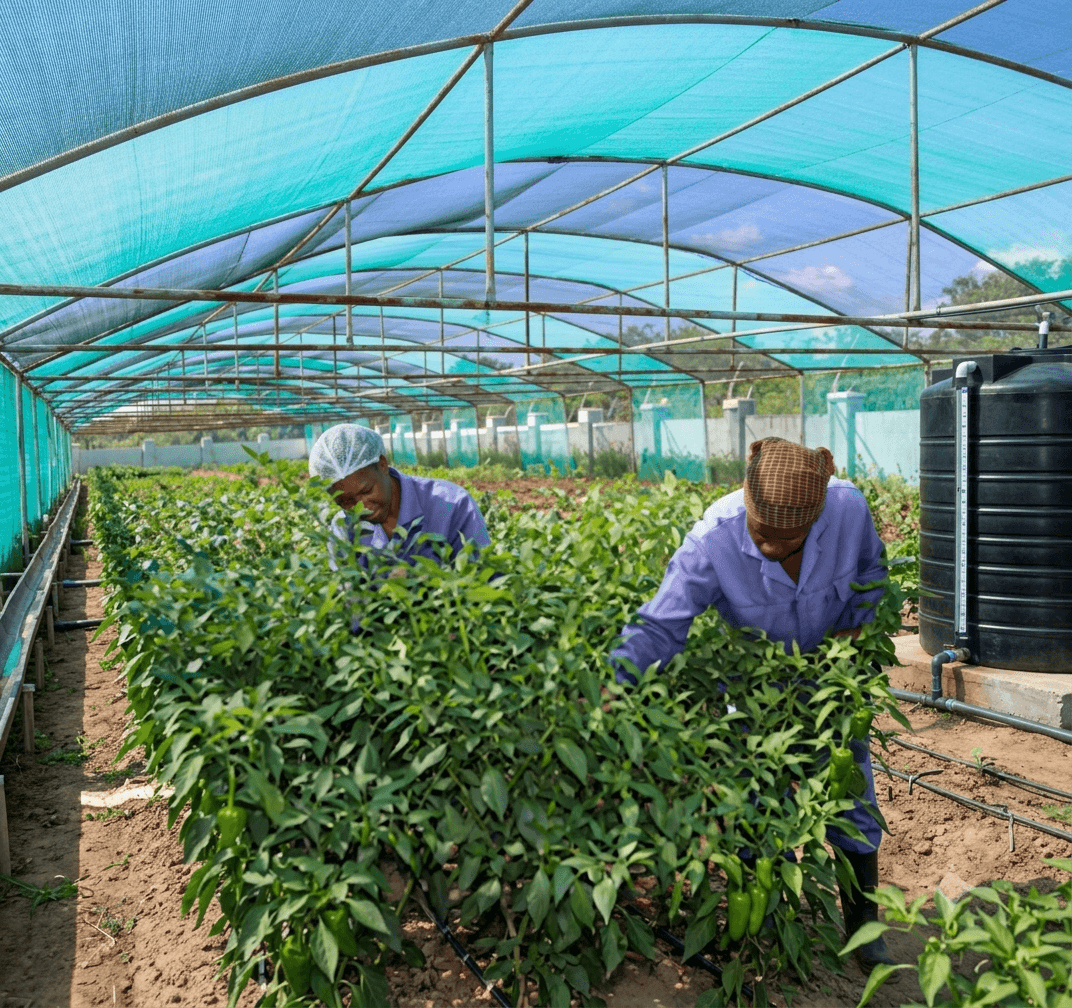
In 2021, KGK launched a rainwater harvesting and drip irrigation project at its Botswana facility. Spread across 780 sq. m., the project was supported by a carefully planned rainwater harvesting system. Here, rainwater is collected from a 2,752 sq. m. roof area and stored through a system that includes a 10,000-litre underground tank and a […]
In 2021, KGK launched a rainwater harvesting and drip irrigation project at its Botswana facility.
Spread across 780 sq. m., the project was supported by a carefully planned rainwater harvesting system.
Here, rainwater is collected from a 2,752 sq. m. roof area and stored through a system that includes a 10,000-litre underground tank and a 1,50,000-litre storage tank. Pumps and a drip irrigation network then help deliver this water to the garden in a controlled and efficient way.
This means that rainwater, which may otherwise have run off unused, is now being collected, stored and directed towards growing vegetables.
Its Impact
The idea may sound simple, but its impact is layered.
By using harvested rainwater, the facility reduces its reliance on municipal water sources.
This is especially meaningful in a semi-arid climate, where water availability can be affected by erratic rainfall and frequent droughts.
The system also helps reduce the energy that would otherwise be used for water supply, while creating long-term cost savings on water expenses.
Lower risk of soil erosion and flooding
The drip irrigation network makes the initiative even more efficient
Instead of flooding the soil or using water in excess, drip irrigation allows water to reach the roots of plants more directly. This reduces wastage and supports healthier plant growth.
Since untreated rainwater is free from many chemicals found in treated supply water, it also supports better growth conditions for plants.
The benefits extend to the soil as well.
Controlled water use helps prevent soil erosion and flooding. It also reduces the need for fertilisers and pesticides because water is delivered more precisely and efficiently.
Over time, this creates a more balanced and responsible way of maintaining the garden. But beyond the technical details, this initiative tells a larger story.
The Larger Commitment:
It reflects a larger commitment to resource conservation and climate-conscious operations.
At a time when water availability is becoming a global concern, businesses have a responsibility to explore practical and measurable solutions.
KGK Botswana’s rainwater harvesting project is one such solution. It shows how a facility can make better use of natural rainfall, reduce waste and create a more sustainable operating environment.
What makes this initiative important?
What makes this initiative important is its simplicity and practicality. It does not depend on a single large action. Instead, it combines thoughtful planning, efficient storage and responsible irrigation to create long-term impact. A roof becomes a rainwater collection surface. Tanks become storage systems. A garden becomes a visible symbol of sustainability in action.
For KGK, this project is part of a broader belief that environmental responsibility should be built into everyday operations. Sustainability should not remain only a policy or a statement. It should be visible in the way resources are used, protected and valued.
At KGK Botswana, rainwater is being given a purpose. It is helping grow vegetables, conserve water and reduce environmental impact.
This initiative reminds us that every resource matters. And when every drop is used responsibly, it can help create a more sustainable future.