
Creating equal opportunities for the deaf community at KGK Botswana
Every human wants to live a dignified life and earn their living based on their capabilities. As an organisation, it’s our responsibility to create truly inclusive workplaces where every individual has the opportunity to learn, contribute and grow. At KGK, we continuously try to build a diverse workforce that embraces differences and creates space for […]
Every human wants to live a dignified life and earn their living based on their capabilities.
As an organisation, it’s our responsibility to create truly inclusive workplaces where every individual has the opportunity to learn, contribute and grow.
At KGK, we continuously try to build a diverse workforce that embraces differences and creates space for people from different backgrounds and abilities.
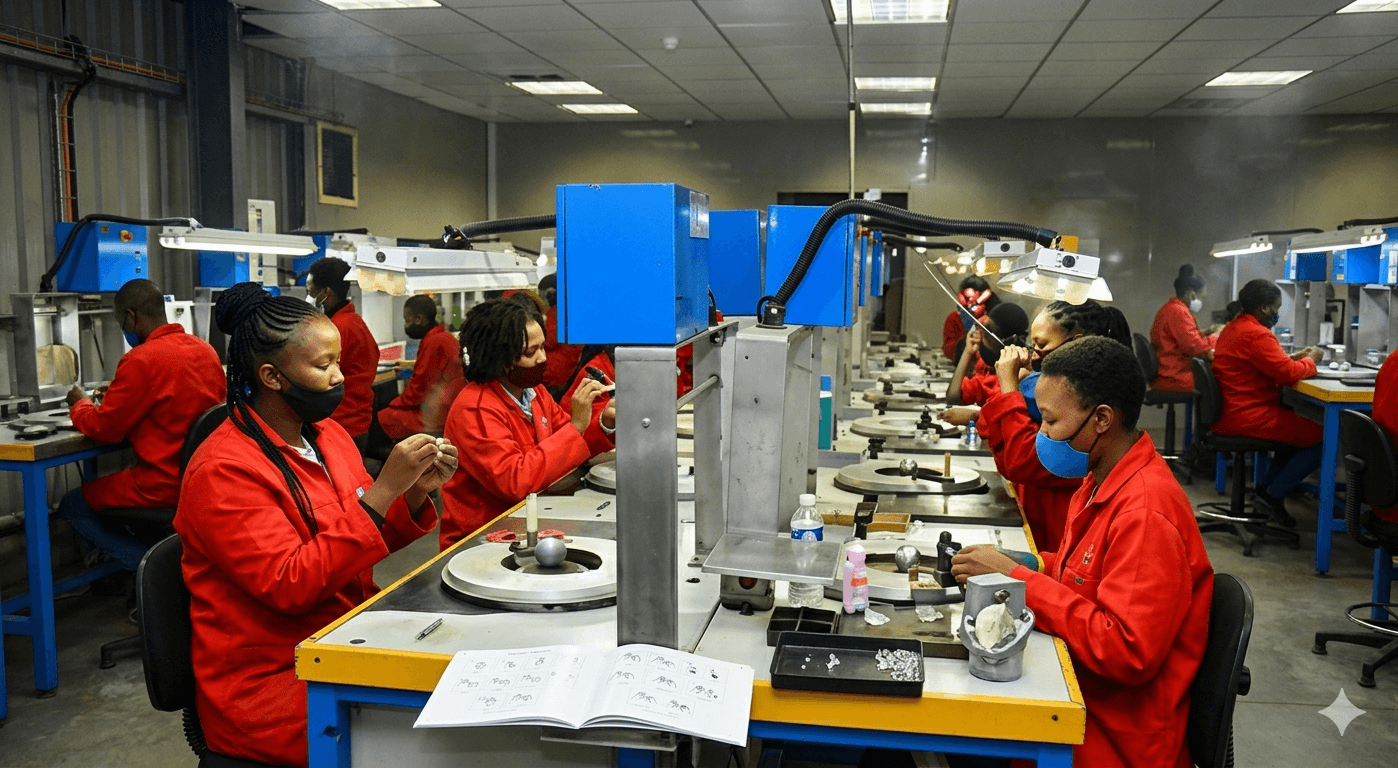
One of the most meaningful examples of this commitment is our partnership with the Botswana Society for the Deaf. Through this engagement, KGK Botswana has been able to train and recruit hearing-impaired individuals in diamond cutting and polishing roles. Currently, 20 hearing-impaired persons are employed with KGK in various roles within this skilled area of work.
This initiative reflects an important shift in how employment opportunities can be created for specially abled individuals.
Why it matters?
Often, hearing-impaired people face challenges not because they lack talent, but because workplaces are not always designed to include them.
Limited access to training, communication barriers and fewer employment pathways can prevent them from entering professional spaces where they are fully capable of contributing.
The impact of this initiative is best understood through the voices of the people it supports. One of our specially abled members when asked about workspace challenges told us, “I want to be treated equally” clearly stating that hearing-impaired employees want to be recognised for their abilities.
What KGK is doing?
Diamond cutting and polishing is a craft that requires concentration, patience and technical skill. By providing structured training, KGK is helping hearing-impaired individuals build capabilities that can translate into real careers.
To make the workplace more accessible, KGK has also developed a sign language manual. This manual helps hearing-impaired employees address common queries and carry out their daily work more easily.
Another important part of this initiative is the opportunity for repeated learning. After six months of training, individuals can transition into a real career in the field. If someone is unable to complete the training at one go, they are given another chance.
This approach recognises that learning journeys can be different for different people, and that patience is an important part of empowerment.
KGK’s commitment also extends beyond employment. The company is sponsoring a school for the deaf in Ramotswa, strengthening its support for education and inclusion within the wider community. This helps create a larger ecosystem where hearing-impaired individuals can access learning, skills and confidence from an earlier stage.
The real impact
The impact of such initiatives goes far beyond numbers.
Employment gives specially abled individuals financial independence, but it also gives them identity, dignity and belonging. It allows families to see their loved ones not as dependent, but as capable contributors. It also helps create role models within the deaf community, showing others that meaningful careers are possible.
By combining skill development, employment, communication support and continued encouragement, KGK is helping break barriers that have often kept hearing-impaired individuals away from formal workplaces.
For KGK, social empowerment is not only about community outreach. It is also about building an organisation where people feel respected, included and valued.
Because creating impact is not always loud.
Sometimes, it happens quietly, at a workbench, where someone who was once overlooked is now shaping diamonds with skill and pride.
Inclusion is not achieved in a single step. It is built through consistent action, thoughtful systems and a willingness to see potential where others may see limitation.