

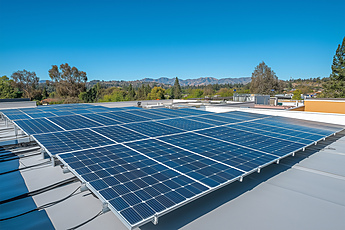
How KGK Botswana is advancing energy efficiency through solar power
Sustainability becomes meaningful only when it moves from vision to action. For KGK, this means taking practical steps across operations to reduce environmental impact, improve resource efficiency and support responsible growth. One such initiative is the solar power system implemented at the KGK Botswana factory in Gaborone. In April 2022, KGK installed a 462 kW […]
Sustainability becomes meaningful only when it moves from vision to action.
For KGK, this means taking practical steps across operations to reduce environmental impact, improve resource efficiency and support responsible growth. One such initiative is the solar power system implemented at the KGK Botswana factory in Gaborone.
In April 2022, KGK installed a 462 kW solar power electricity system as part of its commitment to reduce carbon emissions and promote renewable energy.
What makes this initiative important is not only the installation of solar infrastructure, but the measurable impact it has created over time.
Between April 2022 and March 2023, the system generated 5,61,241 kWh of energy and helped avoid 266.6 tonnes of CO₂. In the following year, from April 2023 to March 2024, the impact grew further. The system generated 6,70,103 kWh of energy and helped avoid 318.3 tonnes of CO₂.
That is a 19.4% increase in year-on-year solar energy generation.
For a manufacturing facility, these numbers matter. They reflect a belief that industrial progress and environmental responsibility do not have to stand on opposite sides. They can move together.
Every unit of solar energy generated at the Gaborone facility reduces the need for energy from non-renewable sources. Every tonne of CO₂ avoided is a step towards a lighter environmental footprint. And every year of improved performance shows that responsible systems can become stronger with time.
This initiative is an important part of KGK’s larger effort to reduce carbon emissions and promote renewable energy. What makes this meaningful is that it is part of how the facility functions every day and not just a one-time campaign.
This is especially relevant in today’s world, where climate change and resource management are no longer distant concerns. They are immediate responsibilities for industries across sectors. Companies are expected not only to produce efficiently, but also to operate responsibly.
With increased energy generation and reduced CO₂ emissions, the project stands as a strong example of KGK’s commitment to responsible resource management and energy efficiency.