

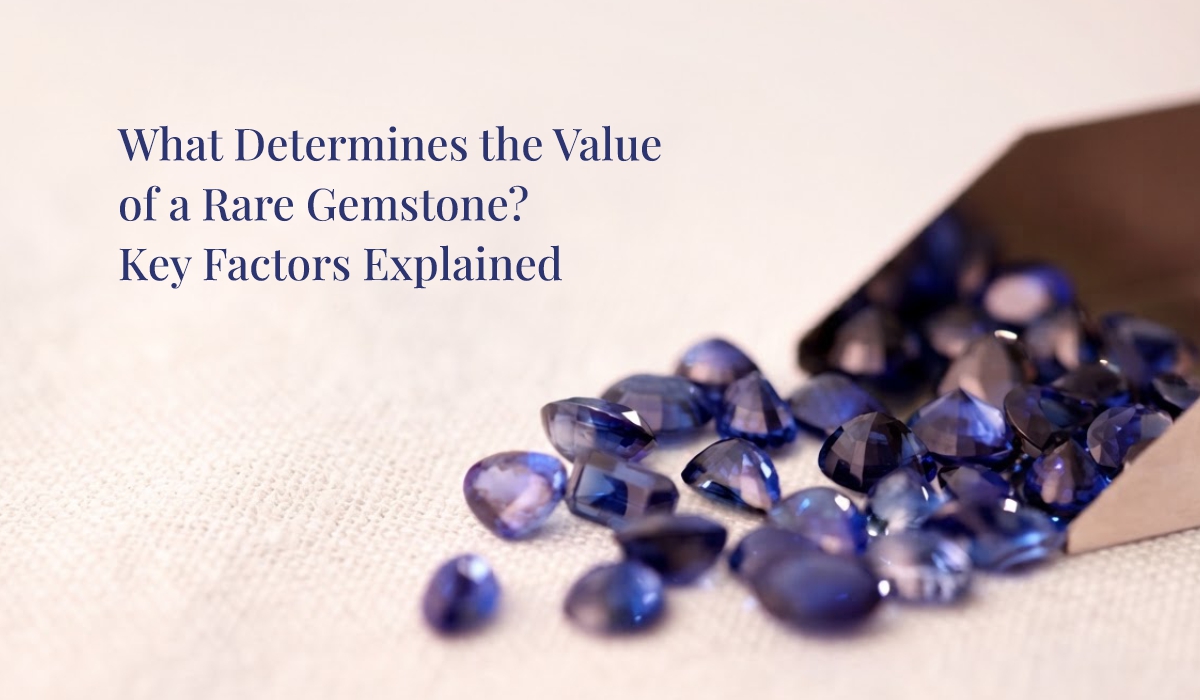
What Determines the Value of a Rare Gemstone? Key Factors Explained
Ascertaining the value of a rare gemstone is a challenging task because it is done after thoughtfully considering some crucial factors. These factors include everything from scarcity and colour to geographic origin and carat weight. The world is full of rare gemstones. While diamond, ruby, sapphire, and emerald are the Big Four gemstones, there exist […]
Ascertaining the value of a rare gemstone is a challenging task because it is done after thoughtfully considering some crucial factors. These factors include everything from scarcity and colour to geographic origin and carat weight.
The world is full of rare gemstones. While diamond, ruby, sapphire, and emerald are the Big Four gemstones, there exist some other stones that are coveted around the globe, such as paraiba tourmailne, tanzanite, padparadscha sapphire, and pink tourmaline. Each of these stones offers a fascinating colour that can instantly turn anyone into its fan.
Whether you are planning to buy a rare stone or just want to learn about gemstone valuation factors, we are here to guide you in your endeavour. So, let us set the ball rolling.
Top 3 Rare Gemstones
Before we get into the crux of how the value of a rare gemstone is decided, let us first know about 3 of the rarest gemstones. These are padparadscha sapphire, paraiba tourmaline, and tanzanite.
Padparadscha Sapphire
Sapphire is one of the most versatile gemstone. It occurs in a wide range of colours except for red, from blue, green, and yellow to pink. However, blue remains one of the most prized varieties of sapphire. Another variety of the gemstone that people love to choose for themselves is padparadscha.
Padparadscha is the rarest variety of sapphire highly sought-after for its mix of yellow, orange, and pink colors. Found typically in Sri Lanka, padparadscha sapphires is considered exceptionally rare because of its delicate pinkish-orange colour and scarcity. So, you can imagine how challenging it would be to value a rare gemstone like this one.
Paraiba Tourmaline
Just like sapphire, tourmaline is another versatile gemstone that’s available in a plethora of colours. Paraiba tourmaline is one of the most popular and rarest colour varieties of the tourmaline gemstone family. You would be pretty surprised to know that the first every paraiba tourmaline was mined only a few decades back in the 1980s.
Although it is a relatively new gemstone compared to others that have been prized for centuries, paraiba tourmaline has quickly garnered a reputation of one of the most sought-after stones in the world.
This blue-green to blue variety of tourmaline is indeed a favourite of many in today’s times. Can you guess the value of this rare gemstone? Well, try imagining it with this fact that paraibas purchased in the 1980s have been known to be resold for several times their price.
Tanzanite
Another rare gemstone that most people covet for its beautiful colour is tanzanite. Despite the fact that this violet blue to bluish violet to violet purple gemstone was found in only 1967, it has quickly become one of the most popular stunners of the jewellery world. The reason? Well, the reason behind the popularity of tanzanite is its rarity.
The tanzanite gemstone is found in only one place on Earth where it was discovered, Tanzania. In addition, according to a Tanzanian geologist, the current rate of mining of tanzanites in Tanzania may lead to the depletion of the supply on hand of the stone in the country. This helps illustrate just how challenging it is to value such kind of rare gemstones.
Now, let’s learn about the factors that are taken into consideration for coloured gemstone pricing.
- Limited Availability: The limited availability of a gemstone significantly influences its rarity and value. The scarcer the gemstone, the higher its chances of fetching an exorbitant price.
- Fascinating Colour: Colour influences the value of a rare gemstone like nothing else does. For instance, one of the reasons why pigeon blood rubies come with a hefty price tag is their deep red colour.
- Geographic Origin: Stones extracted from a specific source with a high reputation of producing exceptional quality material are generally high-priced. For instance, blue sapphires from Kashmir are renowned for their incredible beauty and high prices.
- Carat Weight: Rare gemstones available in larger carat weights generally command higher prices than those available only in smaller sizes. So, there’s no denying that carat weight plays a crucial role in determining the value of a rare gemstone.
Conclusion
The world is full of rare gemstones such as tanzanite, padparadscha sapphire and paraiba tourmaline. Each of these rare gemstones is admired for its striking colours. But did you ever believe what all goes into determining their price? Well, now that you do, don’t forget to appreciate the rarity of a gemstone when you see one in-person.
FAQ
- Does colour influence the value of a rare gemstone?
Yes, colour is a crucial factor that influences the price of a gemstone. Stones with a vivid, well-saturated colour generally command higher prices.
- How important is geographic origin when determining the price of a stone?
Certain mines have a high reputation of producing top-quality stones. Therefore, the geographic origin of a stone is a big influential factor for ascertaining its value.
- Which factor has the greatest influence on a gemstone’s price?
A gemstone’s price is primarily influenced by its rarity, colour, clarity, carat weight, cut, origin, and treatment status.
- Do rare gemstones always come with a hefty price tag?
Generally, yes! But rarity alone does not guarantee a high price.
- How is the quality of a rare gemstone determined?
The quality of all gemstones is ascertained by considering their colour, cut, clarity, and carat weight.